Stay ahead of change

Explore our research, insights, and examples of real client impact, designed to help you embrace the key forces of change and get to value faster.

The Creative Revolution: How Gemini 2.5 Flash Image Is Changing the Way We See Design

The Creative Revolution: How Gemini 2.5 Flash Image Is Changing the Way We See Design

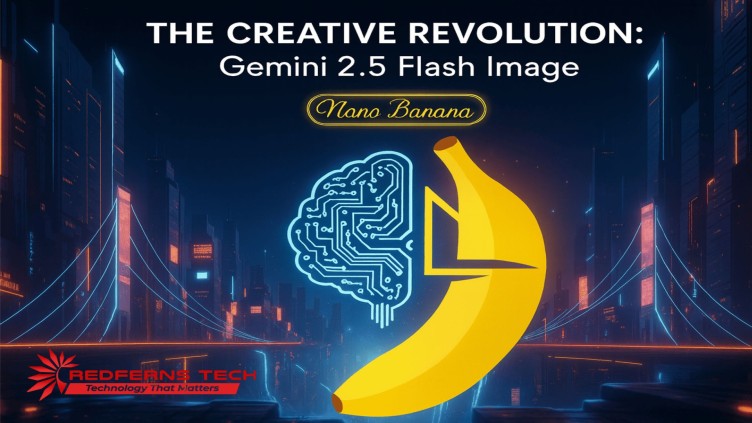
The Gemini 2.5 Flash Image (codename: Nano Banana) imagines the self bridging the gap between creation and imagination — and perhaps, for some, eliminating it fully. A designer can give a simple command and have hours of painstaking workflow redistributed. “Change the background to a neon city.” “Put a gold shimmer on the jacket.” And the command is executed — effortlessly. The new “creators” need to have a trust relationship with the designs. Speed is great, but trust creatively is where AI still strives — and where this release fully succeeds. A New Chapter for Visual Storytelling No longer do we have to rely on guesswork to build a design. Designers, marketers, and everyday creators can unwind and fully envision a design with assisted AI. Starters can go “all in” for every planned campaign — product shots, lifestyle imagery, and social visuals can all stem from one finely crafted master image. Meanwhile, artists can refine their preferred style while still experimenting freely with new aesthetics. This release may not be a complete substitute for creativity — but it certainly embraces the idea differently. Beyond the Buzz — Real Impact Across Industries Marketing teams can run cohesive multi channel campaigns effortlessly. Product designers can explore new materials, colours, and mock ups within minutes instead of days. Social creators can visualize and express themselves with cinematic flair and zero production costs. Educators and students can create engaging visuals for abstract concepts instantly. Finally, Gemini 2.5 Flash Image isn’t just AI — it’s a creative collaborator that listens to a prompt and paints with precision and detail. The Responsible Side of AI Creativity There’s a more nuanced angle to this innovation — trust. Every generated image carries a SynthID watermark, an invisible signature confirming authenticity. It’s a small but significant step toward ethical AI content creation — proof that creative freedom and accountability can coexist harmoniously.

BLOG
 AI Agents: The Silent Revolution Transforming Our World!

AI Agents: The Silent Revolution Transforming Our World!

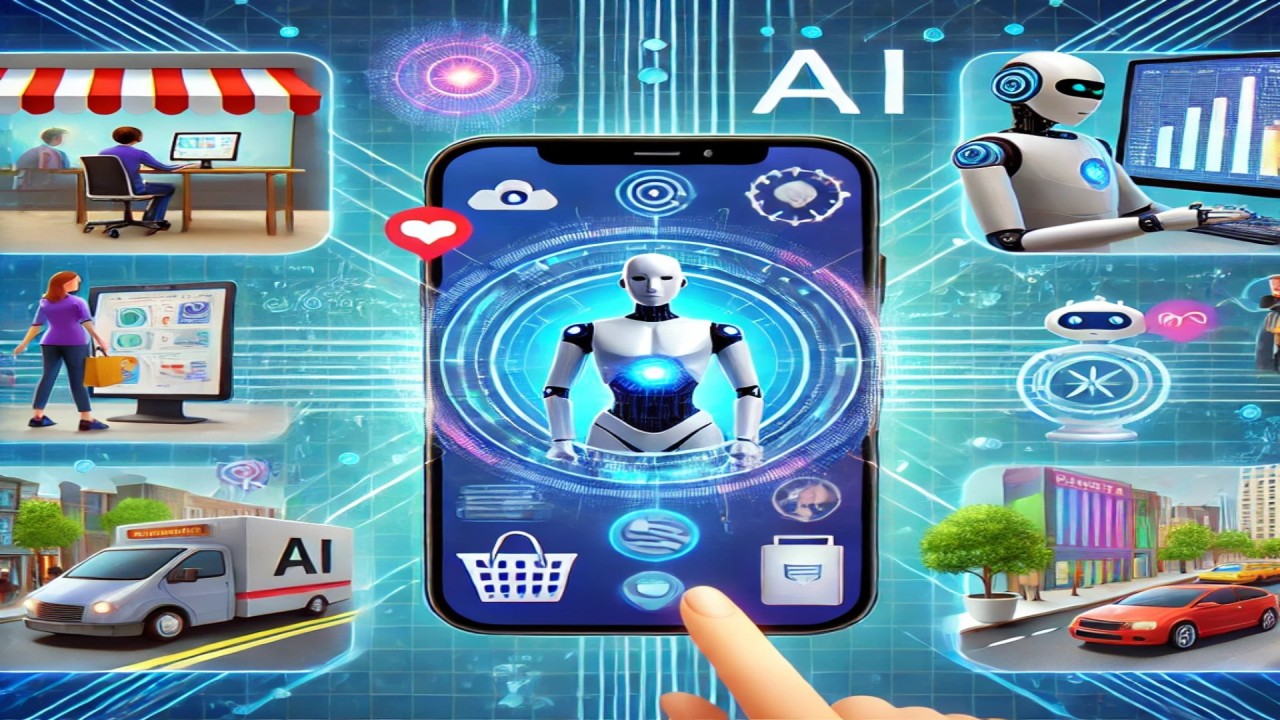
AI is not just a futuristic concept—it’s actively reshaping our lives behind the scenes in ways most people don’t even realize! From personal assistants to scientific breakthroughs, AI agents are making decisions, automating tasks, and even redefining intelligence itself. How AI Agents Are Impacting Our Lives: Everyday Convenience Smart Assistants (Siri, Alexa, Google Assistant) – Managing schedules, smart homes & instant answers. AI Powered Search – Personalized results tailored to user behavior. Healthcare Breakthroughs AI Diagnosis – Predicting diseases, analyzing medical scans & assisting doctors. Virtual Health Assistants – Helping patients book appointments & access medical advice. Revolutionizing Shopping AI Recommendations – Personalized product & content suggestions (Amazon, Netflix, Spotify). AI Shopping Assistants – Finding discounts, comparing prices & even completing purchases. Workplace & Business Efficiency Automated Workflows – AI agents managing emails, reports & data analysis. AI Powered Hiring – Screening candidates, scheduling interviews & optimizing HR processes. Enhanced Customer Support AI Chatbots – Providing instant, human like responses 24/7. Voice Assistants – Seamlessly handling natural language queries. Society & Future Innovations Smart Cities – AI driven traffic control, pollution monitoring & emergency response. Education Transformation – AI tutors offering personalized learning paths. AI in Governance – AI is now influencing court rulings, policymaking & city planning! Beyond Automation – The AI Revolution You Didn't See Coming AI is now: Creating New Intelligence – AI is developing its own ways of thinking & even inventing new languages. Merging with Biology – Designing living organisms (Xenobots) & enhancing human brains with AI. Predicting the Future – AI is detecting hidden patterns in time, forecasting earthquakes & even rewriting reality. Exploring Digital Consciousness – AI is mapping the human brain & enabling thought to text communication. Are We Ready for a World Where AI Thinks Beyond Humans? The AI revolution is here—transforming industries, reshaping reality, and making decisions that impact us all. The future isn’t coming, it’s already here.

BLOG
Enterprise General Intelligence (EGI): Making Constructed AI Competitively Valuable

Enterprise General Intelligence (EGI): Making Constructed AI Competitively Valuable

Taking the world by storm, Artificial General Intelligence (AGI) captures attention. But, for business, the magic is not in the theoretical, it's in the practical. Thus, it is the Enterprise General Intelligence (EGI) which is the further evolution of AI. Designed not for just ‘intelligence’ but for ‘value’ across industries. EGI is sophisticated, disruptive, and business value focused. This is the EGI Zhou Enlai had in mind when considering AI for the value it brings versus what is put on paper. EGI Business Value EGI is the first AI solution that thrives in ‘production’. All other AI solutions promise to transform but, in reality, buckle in complexity beyond the demo. EGI reduces the complexity and delivers: Predictable outcomes in complicated enterprise situations Flexibility to respond to market changes Governance and data security compliance Training the AI Athlete – EGI’s Path to Development Pre training – Primary skills in the use of language, reasoning, and analysis of an issue Fine tuning – Knowledge and understanding of the legal frameworks of the industry Ultra fine tuning – Adaptation using proprietary company data, goals and context EGI Success Factors Integrated Infrastructure – RAG pipelines, embeddings, Large Action Models (LAMs), secure Data Clouds Governance and Risk Management – Ethical, controlled, and AI supervised accountable human oversight Diversified Discipline Competencies – Integration of business skills, data intelligence, and operational strategy Trust as a Non Negotiable Standard Global privacy regulations Confidentiality, privacy, and security of sensitive data Enterprise grade security From Prompts to Practical Outcomes Generate insights from the customer feedback for Q2 Identify the most conversion ready leads for the week Summarize risk factors in compliance documents Why Specialization Wins Over Generalization Every sport has its champions, and every business function is destined to have its own specialized AI agents. EGI fosters the development of domain specific champions. The Call to Action for Enterprises Your business needs more than just intelligence It requires Enterprise General Intelligence

BLOG
The Hidden Cost of Politeness in AI Interactions

The Hidden Cost of Politeness in AI Interactions

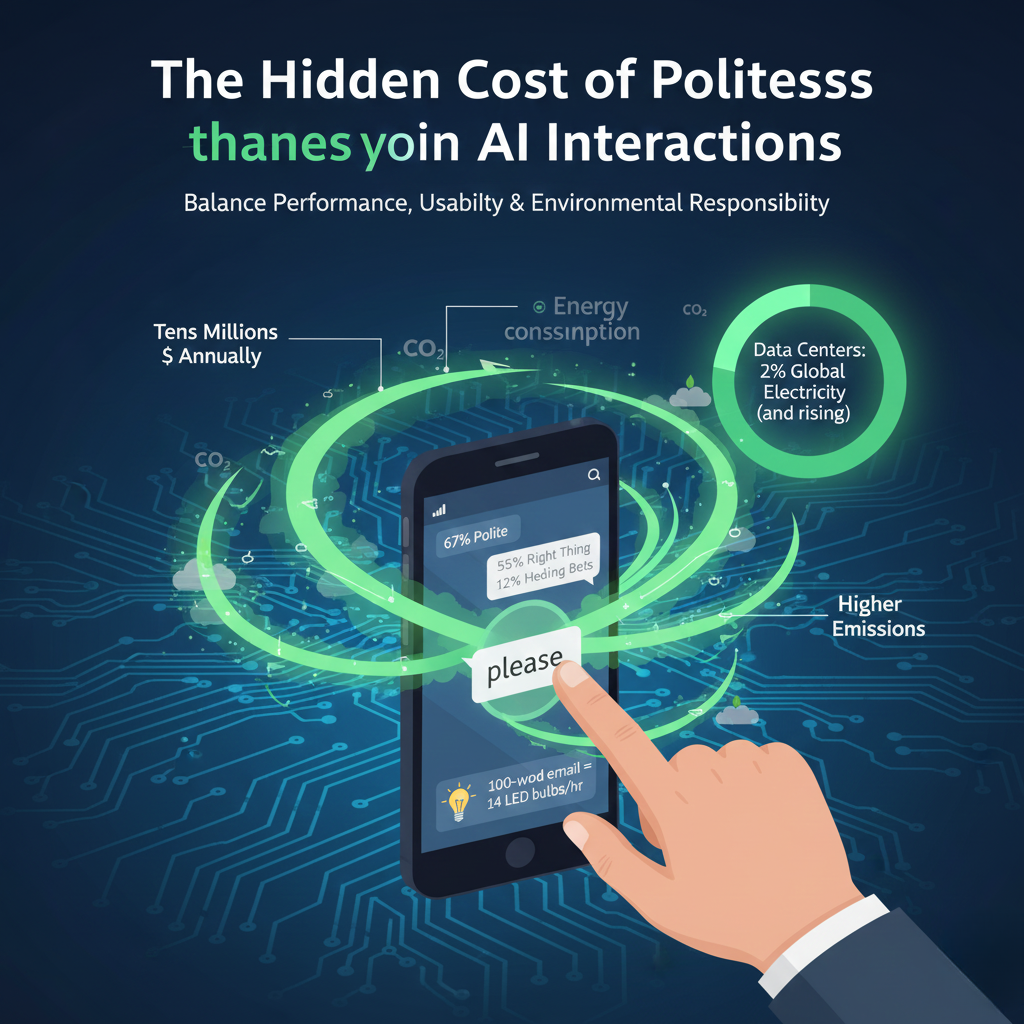
Being courteous to AI—adding a simple "please" or "thank you"—might feel like good etiquette, a show of respect, or even a precautionary nod to a possible AI dominated future. But what if these small gestures come with a surprisingly large environmental cost? OpenAI CEO Sam Altman recently revealed that the collective politeness of users is significantly increasing operational costs—contributing tens of millions of dollars annually in electricity usage alone. Why? Because every additional word processed or generated by large language models like ChatGPT consumes computational power—and that means more energy and higher emissions. According to a 2024 survey, 67% of Americans are polite to AI. 55% say it's simply the right thing to do. 12% admit they’re hedging their bets “just in case” AI becomes sentient. Interestingly, Microsoft’s research suggests that polite prompts often yield better quality responses, especially in nuanced or creative tasks. But behind this rise in "AI etiquette" lies a more pressing issue: sustainability. Data centers already account for around 2% of global electricity consumption. With AI adoption soaring, this figure is expected to climb rapidly. Even generating a 100 word email with AI can use as much energy as running 14 LED light bulbs for an hour. As organizations and individuals increasingly integrate AI into daily operations, it's worth reflecting on the environmental trade offs of seemingly minor choices. What can we do? Craft more concise prompts. Use AI intentionally, not excessively. Push for greener AI models and sustainable data infrastructure. As we build the future of technology, balancing performance, usability, and environmental responsibility is essential. Sometimes, skipping the small talk with your chatbot isn't just efficient—it’s a step toward more sustainable tech. Let’s be mindful about how we interact with AI—not just to get the best results, but to build a future that works for both humans and the planet.

BLOG
Google’s AI Can Now Predict Tropical Cyclones — and It’s Scary Accurate

Google’s AI Can Now Predict Tropical Cyclones — and It’s Scary Accurate

Teaming up with the U.S. National Hurricane Center, Weather Lab can predict the path, intensity, and size of cyclones up to 15 days in advance—generating over 50 possible scenarios per storm using more than 45 years of global storm data. What’s the Breakthrough? Powered by AI That Understands the Atmosphere Like Never Before Built on a stochastic neural network, the model is trained on: Global reanalysis weather data Decades of cyclone track and intensity logs Over 5,000 detailed storm profiles Performance That Surpasses Traditional Models In early trials, Weather Lab outperforms leading systems such as: NOAA’s HAFS ECMWF’s ENS By up to 1.5 days of lead time—a leap that would typically take years of model refinement. What You Can Do with Weather Lab Explore real time and historical predictions Compare AI based and physics based forecasts Access more than two years of global storm forecasts Utilize it for research and emergency preparedness Global Impact and Real World Validation From Madagascar to Miami, Weather Lab has already proven its accuracy—predicting events such as Cyclone Alfred’s landfall a full seven days ahead. With the 2025 hurricane season approaching, global agencies are actively putting it to the test. A Step Toward AI Powered Climate Resilience While still experimental, Weather Lab represents a significant step forward in AI led climate prediction. With every storm, the model continues to learn, adapt, and improve—potentially giving humanity a vital advantage in disaster response. The Future of AI Driven Weather Intelligence This may mark the beginning of a new era where artificial intelligence becomes a cornerstone of planetary scale weather forecasting and resilience.

BLOG
Outsourcing Our Minds? The Cognitive Cost of AI Convenience

Outsourcing Our Minds? The Cognitive Cost of AI Convenience

RedFerns Tech June 5, 2025 The Cognitive Cost of AI Convenience In today’s AI driven world, intelligence is just a prompt away. From content writing to coding, decision making to design — AI is accelerating our output like never before. But here’s the question: Are we unknowingly trading our cognitive strength for convenience? Real World Shifts We Can’t Ignore 1. Deep Thinking Decline Challenge: Tasks that once required strategic thought and mental effort are now reduced to “click and go.” Impact: Our ability to think critically and solve complex problems is slowly eroding. 2. Creativity on Autopilot Challenge: Generative AI creates designs, stories, and campaigns before we even try. Impact: We miss the mental stretch needed for original thinking — leading to creative atrophy. 3. Mental Laziness Is Creeping In Challenge: Why remember facts or learn deeply when AI recalls them instantly? Impact: Memory retention and meaningful learning are in steady decline. What Cognitive Science Tells Us AI processes information. But the human brain builds strength through resistance and effort. No struggle means no neural growth. Skipping the effort rewires us toward passive consumption, not active creation. Over time, we risk becoming dependent — not just on tools, but on thinking substitutes. Why This Should Concern Us 60% of professionals now use AI daily (McKinsey) Only 28% reflect on or learn from AI outputs Research shows automation heavy workflows reduce creativity, memory, and decision quality This isn’t about resisting AI — it’s about rebalancing: using AI to amplify, not replace, our intelligence. The Mindful AI Takeaway AI should accelerate our thinking — not replace it. Use AI to move faster, but still wrestle with complex tasks Let AI support, not substitute, your thought process Stay mindful: know when you’re growing, and when you’re just coasting The future belongs to humans who use AI with intention, not dependence. Let’s Keep Thinking Are there skills or tasks you intentionally avoid automating? Have you caught moments where AI made you mentally “check out”? Join the conversation — reply or connect with us on LinkedIn.

BLOG
The Ghibli Trend – A Viral AI Art Movement

The Ghibli Trend – A Viral AI Art Movement

RedFerns Tech April 17, 2025 Last week, the internet exploded with a new digital art trend: AI generated illustrations inspired by the beloved hand drawn style of Studio Ghibli. This trend, sparked by the latest image generation capabilities in OpenAI’s GPT 4o, led to a massive surge in ChatGPT usage, with weekly active users hitting a record breaking 150 million for the first time in 2025. Sam Altman, CEO of OpenAI, shared a milestone: “We added a million users in the last hour,” drawing a parallel to ChatGPT’s original viral moment back in 2022. Surging Stats Meet Server Strain App Downloads: +11% Weekly Active Users: +5% In App Revenue: +6% However, this massive spike also caused strain on servers, with temporary outages reported. Downdetector logged over 200 complaints in one hour. Altman humorously tweeted, “Can y’all please chill on generating images—this is insane. Our team needs sleep.” Legal Concerns and Public Backlash The trend also stirred debates on the ethics and legality of AI generated art. While artistic styles are not covered by copyright, mimicking Studio Ghibli’s signature aesthetic raised concern. Ghibli co founder Hayao Miyazaki’s 2016 comment resurfaced: “I am utterly disgusted” after seeing AI created artwork. The Bigger Picture: AI in the Creative World Despite the backlash, Altman remains optimistic about AI’s creative role, emphasizing augmentation over replacement. As ChatGPT evolves, the conversation on ethics, copyright, and innovation intensifies. Final Thoughts The “Ghibli Effect” may mark a new era where technology and art converge. Whether embraced or questioned, one thing is certain — AI generated art is now mainstream.

BLOG
Unleashing the Power of Open-Source AI in Innovation

Unleashing the Power of Open-Source AI in Innovation

Ever wondered how open source AI models are transforming the world of technology and business? Let’s explore how these models empower developers, startups, and enterprises to build AI driven solutions faster, smarter, and more cost effectively. What Are Open Source AI Models? Open source AI models are pre trained, freely available machine learning models that can be used, customized, and enhanced for various applications. Whether you're working on chatbots, automation, analytics, or generative AI, these models provide a strong foundation without the need for extensive training from scratch. Accessibility for All – Open source models democratize AI, making it accessible to researchers, startups, and enterprises alike. Customization & Flexibility – Modify models for specific applications, whether it’s chatbots, healthcare AI, or automated decision making systems. Thriving Community Support – A global community constantly improves models, ensuring rapid innovation and problem solving. Cost Efficiency – Save time and money by using pre trained models instead of building AI from the ground up. Most Popular Open Source LLMs (Large Language Models) Here are some of the top AI models leading the open source revolution: BLOOM – Hugging Face’s multilingual powerhouse. GPT NeoX 20B – A strong open source alternative to GPT 3. CodeGen – Optimized for code generation and software development. Mistral AI – Efficient compact models for various applications. Gemma – Google’s cutting edge LLM innovation. DeepSeek – A high performance open source ChatGPT alternative. LLaMA – Meta’s advanced NLP model with open weights. Falcon LLM – High performance models optimized for speed and efficiency. Open Source vs. Proprietary AI: Cost Considerations Open Source AI No licensing costs Full control over model modifications Requires high computational resources Needs AI expertise for deployment & maintenance Proprietary AI Fully managed & optimized solutions Lower hardware & engineering costs Higher subscription fees Vendor lock in risks Suggestion: If you’re a startup or researcher, open source models are a great way to experiment and innovate. However, if you need a turnkey AI solution, proprietary AI might be a better fit. Challenges & Considerations in Open Source AI Data Privacy & Security – Ensure sensitive data is encrypted and anonymized when using AI models. Bias & Fairness – AI models inherit biases from their training data. Regular audits are critical to ensuring fairness. Computational Costs – Open source AI models can be resource intensive. Optimize for efficiency or use cloud based AI services to manage costs. Suggestion: If you're worried about bias and fairness, consider using explainable AI (XAI) tools to analyze decision making patterns. The Future of Open Source AI The open source AI movement is transforming the way businesses, researchers, and developers build intelligent systems. From chatbots to automation and analytics, these models enable faster innovation without the burden of high costs. Let’s continue to embrace open source AI for a smarter, more connected world! How are you leveraging open source AI in your projects? Drop a comment below!

BLOG
Deepseek Deepseek DeepSeek!

Deepseek Deepseek DeepSeek!

While everyone is talking about how DeepSeek has taken the US market by storm, how Chinese AI is outperforming US AI models, and how DeepSeek has built a competitive (or even superior) model to OpenAI with less time and a smaller budget, let's set aside these clickbait, politics, and world news. Instead, let's focus on how DeepSeek made this possible. What innovations did they introduce, and which features set them apart from OpenAI and other models? Let's dive in… The motivation behind Deepseek: Reasoning is a cornerstone of human intelligence. While current AI models demonstrate impressive reasoning skills, their development often depends entirely on supervised fine tuning (SFT) with extensive labeled datasets. This approach, though effective, is not without its limitations. DeepSeek R1 Zero has completely bypassed supervised fine tuning (SFT) and reimagined reasoning in LLMs through pure reinforcement learning (RL): Current AI models high dependence on SFT: OpenAI's language models need datasets where the data is carefully labeled or annotated with the correct answers or information. These high quality annotations help the model learn specific patterns, relationships, or tasks more effectively. In simple terms, these labeled datasets act as teacher, showing the model exactly what to learn. The better the quality of these "lessons," the better the model performs. Deepseek Bypassed SFT: Deepseek completed bypassed this SFT by Reinforcement learning. Reinforcement Learning (RL) is a type of machine learning in artificial intelligence where an agent learns to make decisions by interacting with an environment to achieve a specific goal. Instead of being explicitly told what actions to take, the agent learns through trial and error by receiving rewards (positive feedback) or penalties (negative feedback) for its actions. By completely bypassing the SFT, which makes data collection and curation costly, time consuming, and labor intensive, the process becomes more scalable and efficient. Deepseek’s Group Relative Policy Optimization (GRPO): In RL, there are two key types of models: the actor and the critic.The actor decides what action to take (like a player in a game).The critic evaluates how good that action was (like a coach giving feedback). The GRPO directly focuses on improving the actor. It uses clever tricks to estimate how good actions are directly from the actor's own experiences, without needing a separate critic. Imagine training a player who learns how to play just by replaying and analyzing their own games, without needing a coach to tell them what they did right or wrong. DeepSeek R1 incorporates a small amount of cold start data and follows a multi stage training pipeline. Current models are not always cold start: Cold start fine tuning in AI refers to the process of training a model from scratch or with minimal prior knowledge. Fine tuning models at OpenAI can lead to challenges like carrying over biases from pre training, overfitting to specialized data, and difficulty generalizing to other contexts. It also raises privacy concerns when using proprietary data, is resource intensive, and may not achieve the same level of expertise as a model built specifically for a domain. Deepseek’s Cold Start data: By, this way if you're working with a very niche or unique dataset that the model hasn't seen before, cold start fine tuning lets the model learn from scratch and reduces the risk of carrying over unwanted patterns or biases from previous tasks. Curated dataset with readable long Chains of Thought (CoT) is used to fine tune the base model. So, the dataset is designed to teach the model how to think in a more structured and understandable way, helping it make better decisions and explain things clearly. DeepSeek doesn’t stop with large models; it extends its capabilities to smaller models using distillation techniques. Deepseeks Inovative distillation technique: In AI, distillation techniques are like teaching a smaller, simpler version of a model (called the student) to learn from a larger, more complex model (called the teacher). The teacher doesn’t just transfer raw data—it shares how confident it is in its predictions, insights, patterns it has learned to the student models like Qwen and Llama series. DeepSeek R1, which is a large AI model, has generated 800k high quality examples (training samples). These examples contain useful information for the model to learn from. DeepSeek R1 Distill Qwen 32B surpassed OpenAI’s o1 mini in reasoning tasks, with a Pass@1 score of 72.6% on AIME 2024. Vision for the Future: DeepSeek aims to push the boundaries of what reasoning models can achieve, not just by improving their capabilities but also by making them accessible and reliable across industries.

BLOG
Previous page
Next page